If you can't see this newsletter properly, please click aquí
|
|
|
Ideas for Psychologists from... Everywhere |
Hi there. It's Julian with my new newsletter for psychologists and counsellors, "Practice With Confidence". My aim is to help you to practice safely and confidently. I have a very curious mind and find it hard to stop thinking about ways to improve my practice. That could be good for you because I may find something that you weren't aware of. This is my way of sharing it beyond the people that I supervise directly. What you can expect - 🔬 Nuggets of research that could improve your practice
-
⚠️ Warnings about unsafe practice or the potential for same - because it's usually what you don't know that catches you out.
-
🛠 Tools you can use in daily practice - could be for assessment, could be worksheets, homework assignments, exercises for in-session or between sessions.
-
🖥 Tech ideas I'm an early adopter of just about any technology I find that can help us get more efficient with the 'dross' (appointment making, letter and note writing, report production, bookkeeping, etc.) You know, all the stuff that you didn't get into this field to do.
-
🔄 Reflections on practice, the industry, ethical practice, professional identity - and because I can't help seeing the connections between these - forces and behaviours outside the consulting room that affect our clients. I'm talking all the broad stuff like politics, economics, culture, evolution, chemistry.
-
🗓 How often? Hmm, monthly? Weekly? Every two days? I honestly don't know what the correct answer is. Sometimes I really do come up with five good ideas for articles a day, and sometimes it takes me six weeks to actually write them up and organize them. I'm not trying to build a brand or achieve anything in particular in terms of status, so this newsletter will die if it's not valuable to you. If that's how you feel after you've read 3 or 4 of them*, I'd ask you to email me directly and let me know what it's missing or what put you off before you Unsubscribe me .
You'll be helping the world by making this newsletter a better experience for your colleagues.
What you won't get* - Spam
- Ads
-
Affiliate links
- Guest posts
-
"Hit pieces" on people or organisations
I'm serious about consent marketing which is why there'll be a big fat Unsubscribe link on every newsletter. Not one of these Unsubscribe me at the bottom of the page. * Sneaky exceptions
How sneaky. Putting them right out in the open like this. -
Spam. If you get spam that looks like it's come from me, I've either been hacked or I've done something accidental. Please, please, please let me know so I can act to protect my reputation. I'll be forever in your debt.
-
Ads. Through paid channels like Google? That's a big no. But making you aware of a friend's book, workshop or whatever that I think is of value to my readers, yes. But I won't be taking payment for that.
-
Affiliate links. Yes, some of the tech tools I mention may give me a referral bonus. If that's the case, it will be clearly stated when I talk about them. If you want to deprive me of this tiny benefit (❤️🩹😢, I'll get over it), just search for the company in another browser.
-
Guest posts. Maybe. But probably not. I'd prefer to quote and attribute to them.
-
"Hit pieces" I'm not peddling outrage. This will be a very gentle, but sometimes excited and passionate, newsletter. So when I reflect on a public figure or organisation the key questions I have in mind are "What can we learn?" and "What can be done to protect others?"
|
|
|
This month I'm noticing... |
|
|
|
AHPRA's Changes to the Code of Conduct |
Are you ready for the changes that are coming on 1st of December?
Recently, one of my supervisees asked me if there was a simple table that compared the changes before and after. I couldn't find one on APRA's website, nor from either of my professional membership bodies, so I made one. Feel free to disseminate it to your colleagues.
I haven't worked out how to put tables in this newsletter yet, so you'll have to go to my blog to see the table there. You'll also find a recording of a 'virtual podcast' that will allow you to listen as two presenters discuss the main changes. Even more timesaving! |
|
|
|
How Hard it is to Tell Good Science from Bad |
Don't worry if you haven't done any stats since your honours or masters degree. Peter Attia MD and his accomplice Bob Kaplan explain most of what you need to know to make sense of clinical trials, field studies, data mined population studies, odds ratios, effect sizes, confidence intervals and the difference between absolute and relative risk to help you make sense of the studies that everybody else is getting over-excited about.
Here's the link to the YouTube video: https://www.youtube.com/watch?v=Vnzodlb8rzE and here's the podcast on Peter's site: https://peterattiamd.com/how-to-read-and-understand-scientific-studies/
This podcast is one I listen to at least once a week. Its main focus is longevity, quality of life and medical research. Peter is the author of Outlive: The Science and Art of Longevity [Amazon affiliate link] and appeared with Chris Hemsworth in the documentary series called "Limitless".
|
|
|
|
How AI Could Reduce Hospital Admissions |
Researchers at New York University developed NYUTron, an AI program that estimates a patient's risk of dying and the potential length of their hospital stay. They developed a large language model to process over 4 billion words from all the doctors', including progress notes and discharge instructions.
NYUtron was 7% better than standard methods at predicting who would die in hospital and 12% better at estimating the patient's length of stay. The interesting thing about the researcher's method was that NYUTron read the doctor's notes in whatever form they were presented, so the notes didn't have to be standardised before the LLM could process them. If you receive the kinds of handwritten GP notes I sometimes see, you'll appreciate what an achievement that is. ["Celebrex? Celexa? Celebrity Cruises?"]
Don't get too excited though. Other studies reveal that LLMs in medicine are susceptible to targeted misinformation attacks. Even just 0.001% of wrong information fed into one of these LLMs can cause mistakes. That can quite easily happen if the LLM scrapes data from public domain information that is either out of date or erroneous.
Why that matters? Because patient harm can multiply as the decisions made by such models are propagated through the medical system. I guess we still need the humans for a while longer! |
|
|
| 9 Questions To Ask Clients About Values |
Here is a set of questions that I found helpful in asking clients to identify their values. Feel free to use them with your clients and adapt them. You can see I've mentioned procrastination in there a couple of times. That's because this worksheet is actually for a program I'm writing to apply ACT to procrastination.
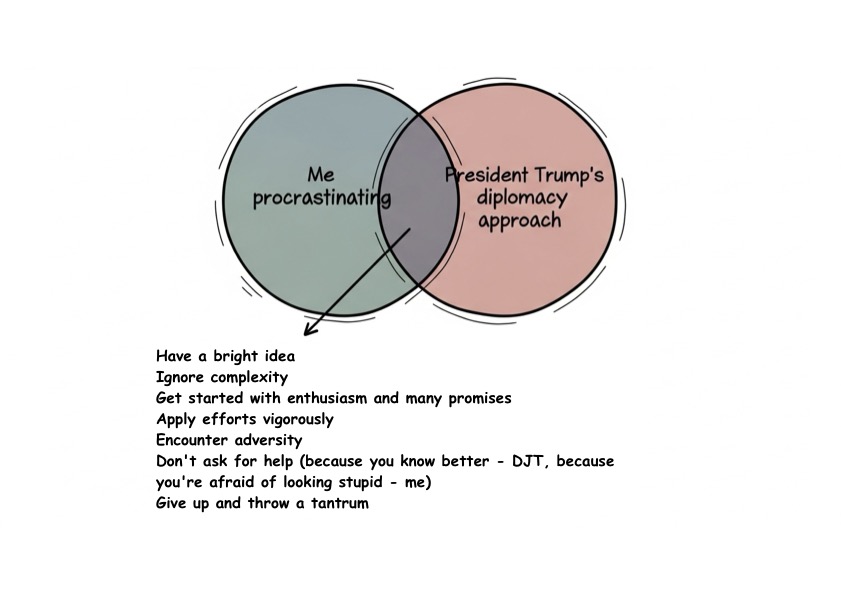
Which is something I'm a world leader in, as the cartoon below explains. The program is not ready yet. And not because I've been procrastinating. Just busy! See you next month. |
|
|
One last thing. About procrastination... |
|
|
|
Would you be willing to share what you’ve learnt here with your colleagues? Send them this link so they can sign up: https://pxl.to/practise-w-confidence.
Or just forward the newsletter from your email. |
|
|
|
I'm Julian, an experienced counselling psychologist and clinical supervisor who came to psychology with a breadth of experience in sales, marketing and operational roles in industries as diverse as, futures trading, retail, warehousing, theatre, insurance, direct marketing and B2B services.
My mission is to end human suffering. That mission is not complete, I can tell, because I'm still alive. |
|
|
Get your autistic health passport |
Logan's health passport: I came across this health passport while trawling the web for - not that, but something else (that's how ADHD-ers roll). I thought it was a great idea and wanted to share it with my clients and colleagues who are autistic. You know the inner conflict that you have when [...] |
| ACT is, and is not, ‘Just another CBT’ |
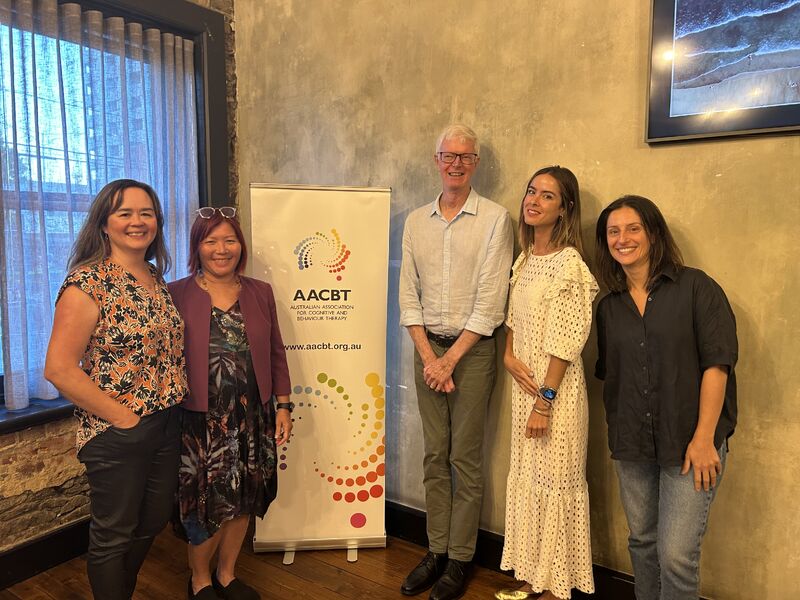
Recently I was invited to give a talk about Acceptance and Commitment Therapy by the Victorian Branch of AACBT. If you didn't make it or are interested in this topic the slides from the presentation are available below the LinkedIn post. Then I've added the references and some examples of responses to typical client [...] |
|
Clients think psychologists have a superpower. What we have is a supervisor. |
Psychologists aren't endowed with superpowers; instead, they rely on the invaluable support of clinical supervisors. These experienced colleagues provide essential guidance and perspective, ensuring high-quality care for clients while fostering professional growth. Implementing similar supervisory structures in other professions could enhance skill development, decision-making, and overall job satisfaction. |
|
|
203 High St, Northcote, 3070 |
| | |
|
The unceded lands of the Wurundjeri people of the Kulin nation are the home of The ACT of Living and this newsletter. We acknowledge their hospitality and continuing stewardship of this Country and their long tradition of healing, learning and storytelling.
Nothing to see here.
Are you avoiding something by reading this footnote? Could you maybe be doing something that is more consistent with what you truly care about? If you're procrastinating, consider doing my online course - taught by a Master Procrastinator: Live Now, Procrastinate Later. But don't, you know, rush over and subscribe to it right now...
|
|
|
|